
In 1993, Dr. Michael Berry published a groundbreaking textbook entitled “Protecting the Built Environment – Cleaning for Health.” Dr. Berry laid out clearly the importance of cleaning on overall environmental quality – indoors and outdoors. For the last almost 40 years, Dr. Berry as a Research Scientist, and many in the field like him have been preaching the doctrine of cleaning for health first and appearance second.
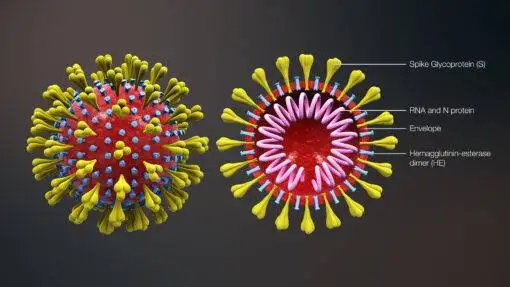
With the present pandemic crisis related to the Covid19 (Coronavirus) the world is having to pay more attention to the concept of cleaning for health. The first step in the prevention of the spread of the virus is more effective deep cleaning procedures. The second recommendation of the health and environmental authorities in the prevention of the spread of the coronavirus is the application of a chemical disinfectant and/or sanitizer.
The US EPA has a list of disinfectants they believe are effective:
https://www.epa.gov/pesticide-registration/list-n-disinfectants-use-against-sars-cov-2
https://www.epa.gov/sites/production/files/2020-03/documents/sars-cov-2-list_03-03-2020.pdf
HydraMaster does not presently sell or distribute any EPA registered disinfectant. You should note that none of the disinfectants and sanitizers you may be used to using for water damage restoration or trauma clean-up from companies within our industry are listed. That does not necessarily mean they are not effective against COVID-19. They may be sub-listed under one of the listed registrations. We would recommend you contact the manufacturer of the EPA registered sanitizer or disinfectant you would like to use and get the information directly from them, or simply use one of the disinfectants listed by the EPA. Always make sure you meticulously follow the directions set forth by the disinfectant manufacturer on their label.
But before we all jump to applying disinfectants everywhere, let’s take a step back and remind ourselves and our customers of the important of cleaning in the prevention process, Cleaning as a process is the removal and extraction of unwanted substances from all indoor surfaces.
In an article in the Journal of Cleaning, Restoration, & Inspection published in 2017, entitled Characteristics of High-Performance Carpet Cleaning, Dr. Berry expounded up on his thoughts specific to floor cleaning. “Effective cleaning is the process of extracting and removing unwanted matter to the optimum extent to reduce exposure to unwanted matter. Most people clean carpets when they look dirty. Rarely does anyone recognize that their carpet needs to be cleaned for health protection. Yet every time pollutants are extracted from the carpeting; the quality of the indoor environment is enhanced by reducing exposures. A high-performance carpet cleaning process focuses on nine steps using a wet, high temperature, high flow, high extraction system”
The value of heat in the cleaning process should also be reinforced at this point. Most understand that the use of heat accelerates most chemical reactions resulting in deeper cleaning and often reduced drying times. But the use of heat in the role of the removal and treatment of unwanted substances, including biological germs and viruses has been scientifically measured and demonstrated in studies sponsored by divisions of the United States Environmental Protection Agency, Air Quality Sciences, Airmid Health Group, and others between 1991 and 2014. Measured reductions in biological contaminants can be clearly demonstrated in carpets, textiles, upholstery, and hard surface floors after the use of high performance truckmounted cleaning equipment that can maintain temperatures across the surfaces being cleaned of 160º+ F.
In any application of sanitization and disinfection, the first step must first be deep, restorative cleaning, extraction, and removal of unwanted substances. For surfaces that can be treated with chemical sanitizers and disinfectants, removal and extraction of as much of the harmful contamination prior to the application of those disinfectants is extremely important.
Industry instructor and consultant, Rachel Adams-Beja has written;
“Regardless of what chemicals may be able to destroy the Novel Coronavirus, most efficacy tests are done in clinical environments and not tested “in field” meaning that the real-world application and efficacy may not achieve the same results.
As such, it is critical to remember that most antimicrobial products (disinfectants) are not going to achieve the desired results when applied to soiled surfaces, soft furnishings, etc.
Even surfaces that appear visibly clean must be cleaned thoroughly prior to application of chemicals.
The fact is that proper cleaning of surfaces is much like washing of hands and offers more protection than application of hand sanitizer as it removes the contamination rather than trying to “kill” or destroy it. The international restoration industry should lead by example and not engage in ineffective practices of applying chemicals (spraying or fogging) without proper cleaning first.”
So fellow cleaning and restoration professionals, you are and should be on the forefront in the attack on this 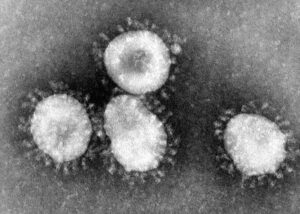 pandemic. You need to be educating your customers on the absolute necessity of cleaning for health at this point and the application of high temperatures to all surfaces in a home with your HydraMaster truckmounted mobile cleaning plant. At the same time, you do not want to oversell your capabilities or provide your customers with a ‘false sense of security.” Quote guidelines provided by national and international authorities such as the Center for Disease Control (CDC) (https://www.cdc.gov/coronavirus/2019-ncov/index.html) or the World Health Organization (WHO) (https://www.who.int/health-topics/coronavirus) While we know that using extremely hot water through a truckmount across a surface does provide for some reduction in biological contamination, that does not mean the surface has had all potentially harmful organizations killed or extracted and removed. Even if you do apply a sanitizer or disinfectant to a surface, you do not want to make claims that you have ‘sanitized or disinfected” any surface or environment. You certainly do not want to imply in any way you are “guaranteeing” or “certifying” that you have killed the corona virus. You are simply taking the steps recommended by the authorities, and if using a disinfectant, you are applying it. Make sure your billing states specifically the steps you did (e.g; “applied an EPA registered disinfectant”) without making any guarantees.
Here are some other industry resources related to the coronavirus you may want to read:
https://cleanfax.com/news/issa-produces-special-coronavirus-webinar-as-who-declares-pandemic/
https://www.iicrc.org/page/FeaturedNews
Biographical Information – Quoted experts
Dr. Michael Berry
 Dr. Michael A. Berry retired from the US Environmental Protection Agency in 1998 after a 28 year career with that agency. In EPA he was a senior manager and scientist. He was the Deputy Director of National Center for Environmental Assessment at Research Triangle Park, NC for 22 years. During his EPA career, he had extensive interactions with private industry, trade associations, environmental organizations, governments, the federal courts, US Congress, universities world-wide, and institutions such as the National Academy of Sciences, the World Health Organization, and the North Atlantic Treaty Organization. Dr Berry is recognized internationally as an expert in the subject of indoor environmental quality. Between 1985 and 1994, he directed EPA’s indoor air research program.
Since his retirement from EPA he has been a Research Professor at the University of North Carolina at Chapel Hill where he taught several course and wrote numerous articles related to business and environment, built environments, and environmental science and management. He serves as a consultant to businesses and public institutions in the evaluation of environmental management strategies and policy. He directs research on the performance of products and services related to indoor environmental quality. Currently his research focus is the area of cleaning science and indoor environmental management programs for schools and universities.
He earned a Doctor of Philosophy in Public Health from the University of North Carolina at Chapel Hill, and a Master of Science in Management from Duke University’s Fuqua School of Business. He holds both Bachelor and Master of Science degrees in Mathematics from Gonzaga University.
Rachel Adams-Beja
 Rachel Adams-Beja has been involved in the water damage and environmental health industries for more than 27 years. She holds a dual bachelor’s degree in environmental health sciences and Medical Technology (Toxicology) from Purdue University. She is certified by the American Society of Clinical Pathologists and holds a Master Restorer designation from the IICRC through her training, dedication, and field experience.
Tags: cdc, corona, coronavirus, covid-19, deep cleaning, disinfectant, epa, heat, michael berry, rachel adams-beja, sanitize, virus, who